
5 Common Snow Removal Bottlenecks Municipalities Face—and How to Avoid Them
Posted on: July 27, 2026
When a major snowstorm hits, residents don't care how many routes you have, how many operators are on shift, or how much snow fell overnight.
They care whether the roads are open, the parking lots are accessible, and the sidewalks are safe.
For municipal public works departments, winter operations are a constant race against time. The difference between a successful snow event and a frustrating one often comes down to identifying and eliminating bottlenecks before the first flakes fall.
Fortunately, many of the most common snow removal challenges can be solved with equipment you may already own—and the right attachments.
1. Not Having Enough Snow-Clearing Equipment
One of the biggest challenges municipalities face during large snow events is equipment availability.
Dedicated plow trucks are essential, but they're also expensive and limited to specific routes. When snowfall exceeds expectations, departments often find themselves short on available equipment.
The result? Slower response times, delayed clearing operations, and crews struggling to keep up.
How to Avoid It
The most effective municipalities maximize the equipment already in their fleet.
By outfitting skid steers, compact track loaders, and wheel loaders with snow removal attachments, public works departments can dramatically increase snow-clearing capacity without purchasing additional dedicated snow vehicles.
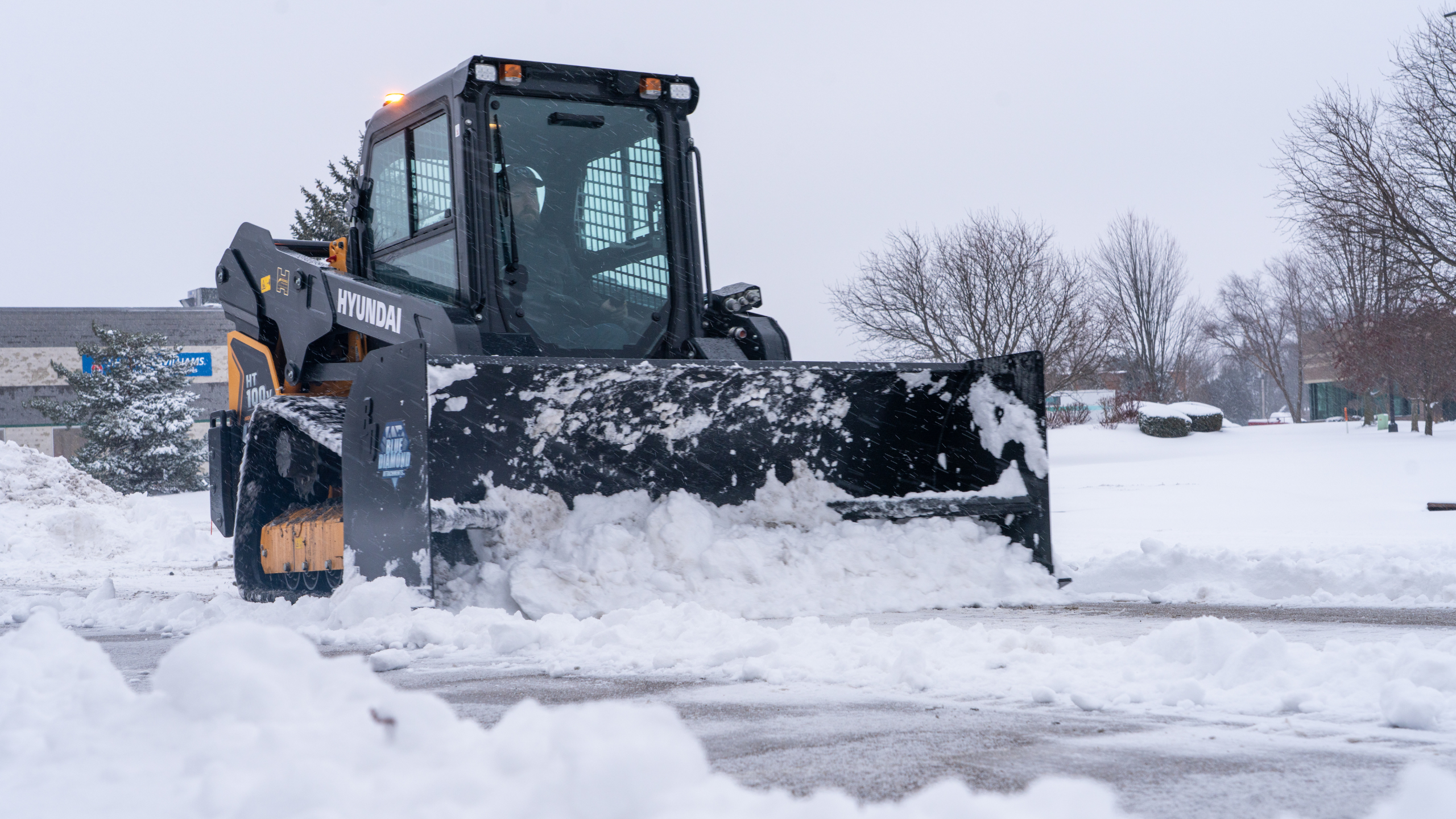
A loader equipped with a snow pusher can quickly clear municipal parking lots, public facilities, schools, and other large paved areas while plow trucks remain focused on roadways.
The more machines available during a storm, the faster crews can respond.
2. Spending Too Much Time on Parking Lots
Parking lots may seem simple compared to roadways, but they often become one of the biggest time drains during a storm.
Traditional plows require multiple passes and can leave windrows that need additional cleanup.
Over the course of a season, those extra passes add up to significant labor, fuel, and equipment hours.
How to avoid it
Snow pushers are specifically designed to maximize snow-moving efficiency.
Instead of pushing snow off to the side with every pass, a snow pusher contains and carries snow forward, allowing operators to clear larger areas faster and with fewer passes.
For municipal parking lots, maintenance facilities, schools, and public buildings, snow pushers can dramatically improve productivity while reducing operating costs.
3. Snow Piles Start Taking Over
Even after lots and roads are cleared, municipalities often face another challenge: where to put the snow.
As storms continue throughout the season, snow piles grow larger, reducing parking capacity, blocking sightlines, and creating safety concerns for drivers and pedestrians.
Without a plan for snow relocation, crews may find themselves repeatedly revisiting the same areas.
How to avoid it
Snow buckets provide the flexibility needed to move accumulated snow away from high-traffic areas.
Instead of simply pushing snow into larger and larger piles, operators can load, transport, and relocate snow where it won't interfere with daily operations.
This is particularly valuable around municipal buildings, downtown districts, schools, and public parking facilities where space is limited.
4. Sidewalks and Tight Areas Fall Behind
Roads usually receive priority attention during snow events, but residents also expect sidewalks, trails, transit stops, and facility entrances to remain accessible.
Unfortunately, large plow trucks simply aren't designed for these tighter spaces.
This often leaves crews scrambling to clear pedestrian areas long after roads have reopened.
How to avoid it
Snow blades mounted on compact equipment provide the maneuverability needed to clear sidewalks, pathways, and other confined areas efficiently.
With the ability to angle snow and work around obstacles, snow blades allow operators to maintain pedestrian access throughout the storm rather than treating it as a secondary task.
For municipalities focused on safety and accessibility, this can make a significant difference in overall winter operations.
5. Cleanup Takes Longer Than the Storm
Snow removal doesn't end when the snow stops falling.
Packed snow, slush, sand, and debris often remain behind, creating slippery conditions and reducing the effectiveness of previous clearing efforts.
Many municipalities spend almost as much time on cleanup as they do on the initial snow event.
How to avoid it
Angle brooms are one of the most versatile winter maintenance tools available.
They excel at removing light snow, slush, salt residue, sand, and debris from roads, sidewalks, parking lots, and public facilities.
By incorporating angle brooms into winter operations, municipalities can improve surface conditions, reduce slip hazards, and return areas to normal use faster.
They're especially effective during lighter snowfalls when deploying larger snow-removal equipment may not be necessary.
Winter Success Starts Before the First Storm
The municipalities that consistently perform well during winter weather aren't necessarily the ones with the biggest budgets.
They're the ones that maximize the equipment they already have.
Snow pushers help clear large areas faster. Snow blades improve maneuverability in tight spaces. Snow buckets provide snow relocation capabilities. Angle brooms handle cleanup and light snowfall events.
Together, these attachments allow municipalities to transform existing loaders into year-round assets capable of handling virtually every stage of winter operations.
Because when the next storm arrives, the goal isn't just moving snow—it's eliminating the bottlenecks that slow your crews down.