
Brush Cutter or Drum Mulcher? Choosing the Right Attachment for Land Clearing
Posted on: September 2, 2026
Whether you're bidding land clearing projects, maintaining utility corridors, or preparing sites for development, choosing the right attachment affects everything from productivity and fuel consumption to project timelines and profitability.
For land clearing contractors, operators, fleet managers, and vegetation management crews, the choice often comes down to two proven solutions: brush cutters and drum mulchers.
While both attachments are built to clear vegetation, they are designed for different applications. Understanding where each attachment performs best can help you maximize machine productivity, improve equipment utilization, and confidently match the right tool to the job.
brush cutter: Best for Routine Vegetation Management
A brush cutter is designed to cut and clear heavy vegetation, including grass, brush, weeds, and smaller trees. With a wide cutting path and higher operating speeds, it's an excellent choice for reclaiming overgrown properties and managing recurring vegetation.
Best Applications for Brush Cutters
Brush cutters are commonly used for:
- Right-of-way maintenance
- Pasture and field management
- Roadside clearing
- Trail maintenance
- Fence line cleanup
- Property maintenance
- Storm debris cleanup
If recurring vegetation maintenance is your primary workload, a brush cutter delivers the speed and versatility needed to keep crews productive.
Drum Mulcher: Best for Heavy Land Clearing
A drum mulcher is designed to cut and process trees, heavy brush, and woody vegetation into mulch in a single pass. By reducing material on-site, it minimizes cleanup and prepares land for the next phase of work.
Best Applications for Drum Mulchers
Drum mulchers excel in:
- Land clearing
- Site preparation
- Forestry work
- Right-of-way clearing
- Invasive vegetation removal
- Trail construction
- Large-scale property development
For contractors looking to expand their services or tackle more demanding projects, a drum mulcher provides the power and processing capability needed for dense vegetation and wooded areas.
Brush Cutter vs. Drum Mulcher: Key Differences
While both attachments clear vegetation, they differ in how they process material and the applications they're built to handle. A brush cutter is typically the better choice for maintaining land that is already established. A drum mulcher is better suited for transforming heavily overgrown or wooded areas into usable space.
| Brush Cutter | Drum Mulcher | |
|---|---|---|
| Primary Use | Brush CutterCutting vegetation | Drum MulcherProcessing vegetation into mulch |
| Best For | Brush CutterGrass, brush, and smaller trees | Drum MulcherTrees, dense brush, and land clearing |
| Finished Result | Brush CutterCut vegetation remains | Drum MulcherMulched material remains |
| Ideal Projects | Brush CutterMaintenance and reclamation | Drum MulcherClearing and site preparation |
Brush cutters typically cover more ground at higher travel speeds, making them ideal for routine maintenance. Drum mulchers work more deliberately but produce a cleaner finished result on dense vegetation, often reducing the need for additional cleanup or follow-up passes.
Before investing in either attachment, make sure your skid steer or compact track loader has the hydraulic flow and horsepower required for the work you'll be performing.
Which Attachment fits your work?
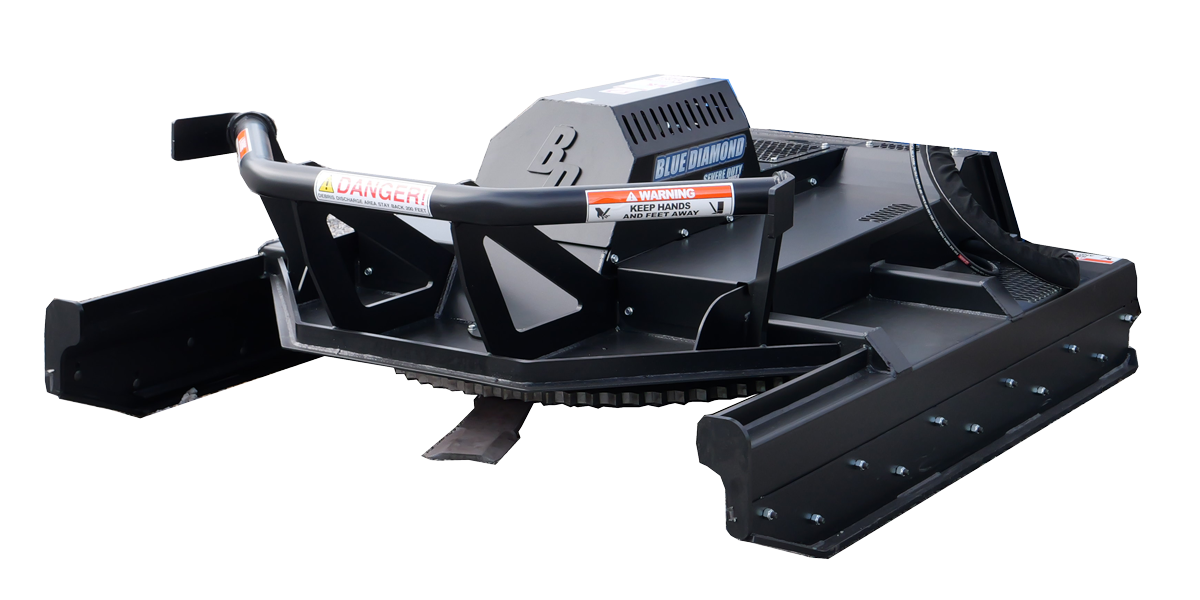
Choose a Brush Cutter If You:
- Maintain roadsides, fields, pastures, or properties
- Need to control recurring vegetation growth
- Regularly clear grass, brush, and smaller trees
- Want a versatile attachment for routine maintenance
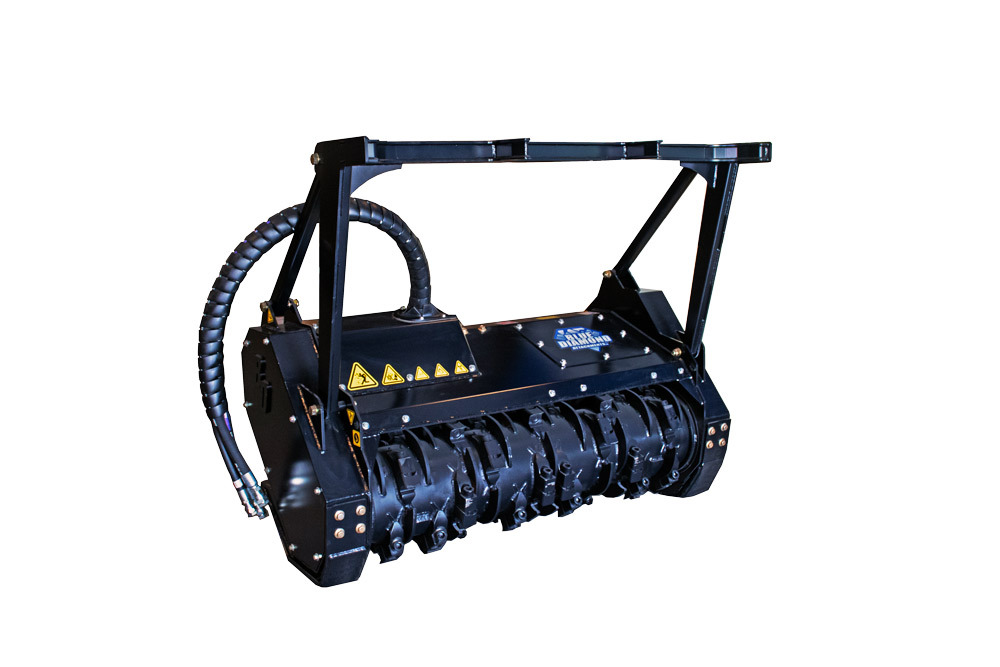
Choose a Drum Mulcher If You:
- Perform land clearing projects
- Remove heavy brush and trees
- Prepare construction sites
- Manage forestry or right-of-way applications
- Want to expand your vegetation management services
Why Many Contractors Use Both
For many operations, the question isn't brush cutter or drum mulcher—it's knowing when to use each.
A drum mulcher is often the first attachment on the job, clearing dense vegetation, trees, and heavy brush to prepare a site. Once the initial clearing is complete, a brush cutter becomes the ideal tool for ongoing maintenance and vegetation control.
Utility contractors commonly follow this approach by using drum mulchers for initial right-of-way clearing, then switching to brush cutters to keep vegetation under control over time.
For fleet managers, this combination improves equipment utilization, gives crews the flexibility to handle a wider variety of projects, and helps maximize the return on existing machines.
Equip Your Fleet for More Opportunities
Choosing between a brush cutter and a drum mulcher isn't about finding the "better" attachment—it's about selecting the one that best matches your workload.
Evaluate the material your crews encounter most often, the services you provide today, and the types of projects you want to pursue in the future.
The right attachment helps operators work more efficiently, reduces unnecessary wear on equipment, and allows your team to complete more work with the machines already in your fleet.
Whether you're maintaining utility corridors, reclaiming overgrown properties, or preparing sites for development, matching the attachment to the application is one of the simplest ways to improve productivity and profitability.